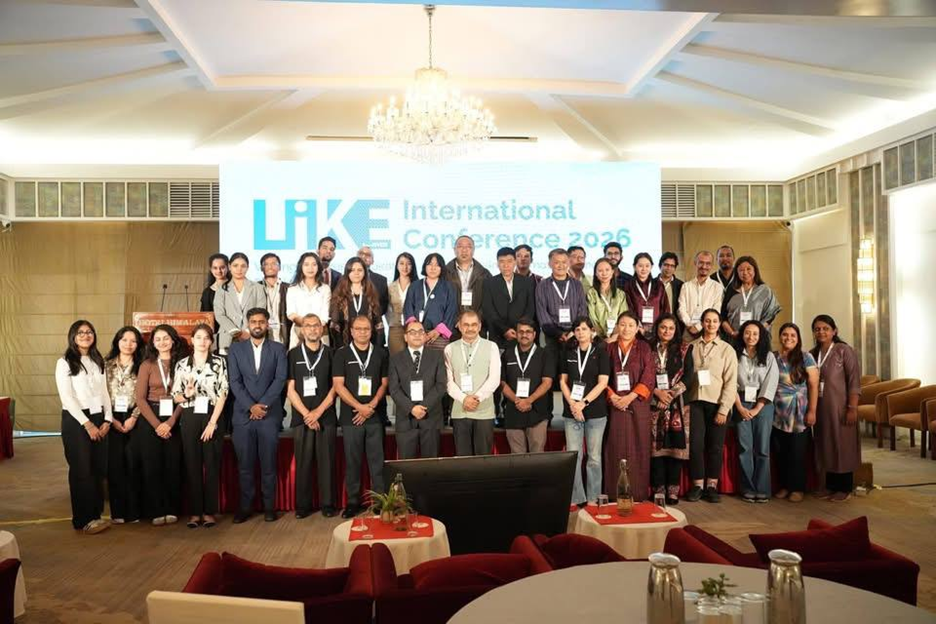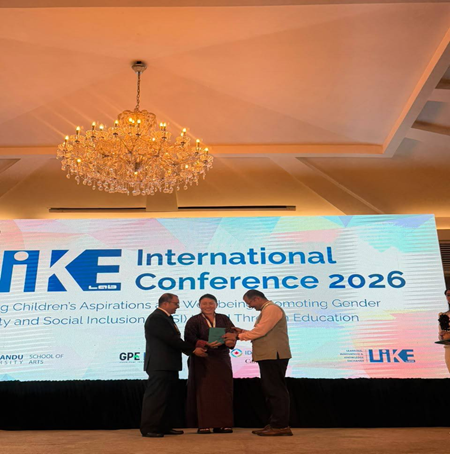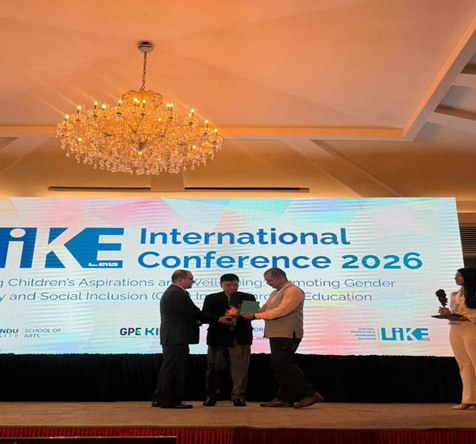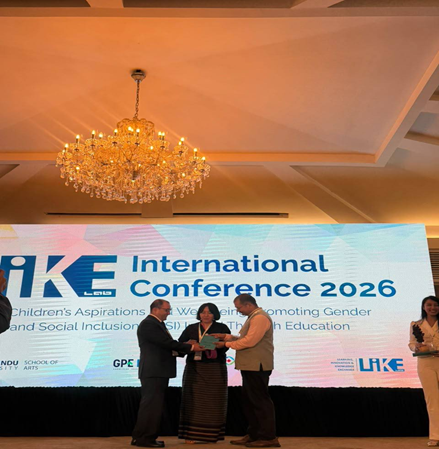
A four-member delegation from Samtse College of Education (SCE) participated in the LIKE International Conference 2026, organised by the School of Arts, Kathmandu University (KUSOA), through its Learning, Innovation and Knowledge Exchange (LIKE) Lab, in Kathmandu, Nepal, from25 to 27 September 2026.
The visit included a project consortium meeting followed by a two-day international conference. The project meeting provided an opportunity for partners to share updates on project achievements, challenges and progress, and to discuss the way forward. Partners also discussed upcoming consortium activities to be hosted in Bhutan. The meeting brought together representatives from Kathmandu University School of Arts, Samtse College of Education, the Royal University of Bhutan and RDRS Bangladesh under the GESI research-for-development project supported by GPE KIX and IDRC.
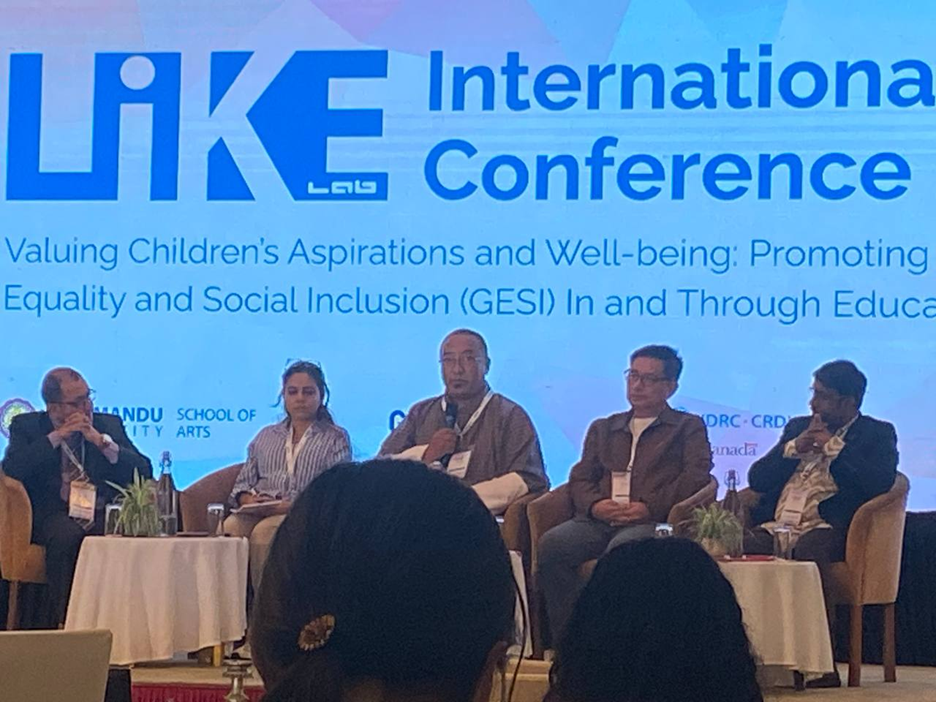
The two-day conference was held under the theme “Valuing Children’s Aspirations and Well-being: Promoting Gender Equality and Social Inclusion (GESI) In and Through Education.” It brought together around 70 participants, including international delegates, Kathmandu University staff and students, as well as researchers, academics, policymakers and development practitioners. The conference provided a platform for participants to share research, experiences and perspectives on making education more inclusive, equitable and responsive to children’s aspirations and well-being.
The conference explored a wide range of contemporary educational issues, including children’s well-being, gender equality, disability and social inclusion, the Capability Approach, child participation and leadership, artificial intelligence and digital education, and the scaling of educational interventions. A key emphasis was the need to move beyond conventional measures of educational access and achievement and consider what children value, what they are able to do and become, and the conditions that enable them to flourish.
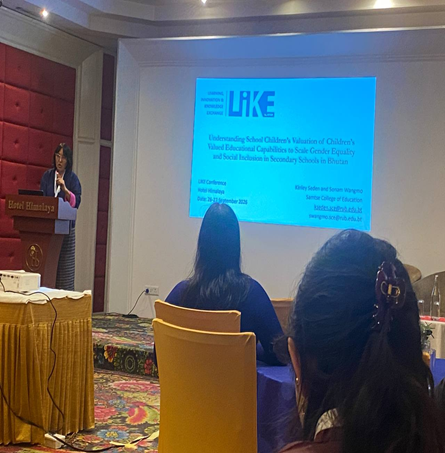
Representing Bhutan, members of the SCE delegation actively contributed to the conference through research paper presentations and panel discussions. One of the papers presented was “Understanding School Children’s Valuation of Children’s Valued Educational Capabilities to Scale Gender Equality and Social Inclusion in Secondary Schools in Bhutan. ” The presentation shared findings from the baseline and endline studies and examined changes in children’s valued educational capabilities over time. Particular attention was given to understanding why some capability scores declined at endline and what these changes imply for promoting GESI in Bhutanese schools.
Another research paper, “Children’s Valued Educational Capabilities: Children’s Perceptions of Resource Availability, Satisfaction, and Relevance in Bhutanese Schools,” examined children’s perspectives on educational resources and their contribution to children’s opportunities and well-being. The study adopted a Participatory Action Research (PAR) approach and placed children’s perspectives at the centre of the research process.
The Bhutan team also participated in the panel discussion “Scaling Children’s Valued Educational Capabilities in South Asia: Experiences of GPE KIX Projects in Bangladesh, Bhutan and Nepal,” where experiences, achievements, challenges, learning and future plans from the Bhutan project were shared.
The conference provided valuable opportunities for cross-country learning and professional exchange. Discussions reinforced the importance of viewing children not merely as recipients of education or sources of research data, but as active participants and knowledge holders whose perspectives can inform educational interventions and improvement.
The conference also strengthened understanding of the Capability Approach, particularly the distinction between the availability of educational resources and children’s actual opportunities to benefit from those resources. The discussions emphasised the importance of examining whether children are able to participate, learn, feel safe, develop relationships and exercise agency.
For SCE, the conference provided an important platform to share Bhutanese research with an international audience while strengthening professional networks and collaboration with partner institutions in South Asia. The learning is expected to contribute to child-centred and participatory teacher education, GESI-responsive pedagogy, participatory Action Research, research-informed teaching, and the integration of the Capability Approach into teacher education and research at the College.
Overall, the participation of the SCE team in LIKE International Conference 2026 provided an important opportunity to showcase Bhutanese research, exchange knowledge with regional and international researchers, strengthen collaboration among GESI project partners, and reflect on ways to make education more inclusive, participatory and responsive to children’s aspirations, capabilities and well-being.