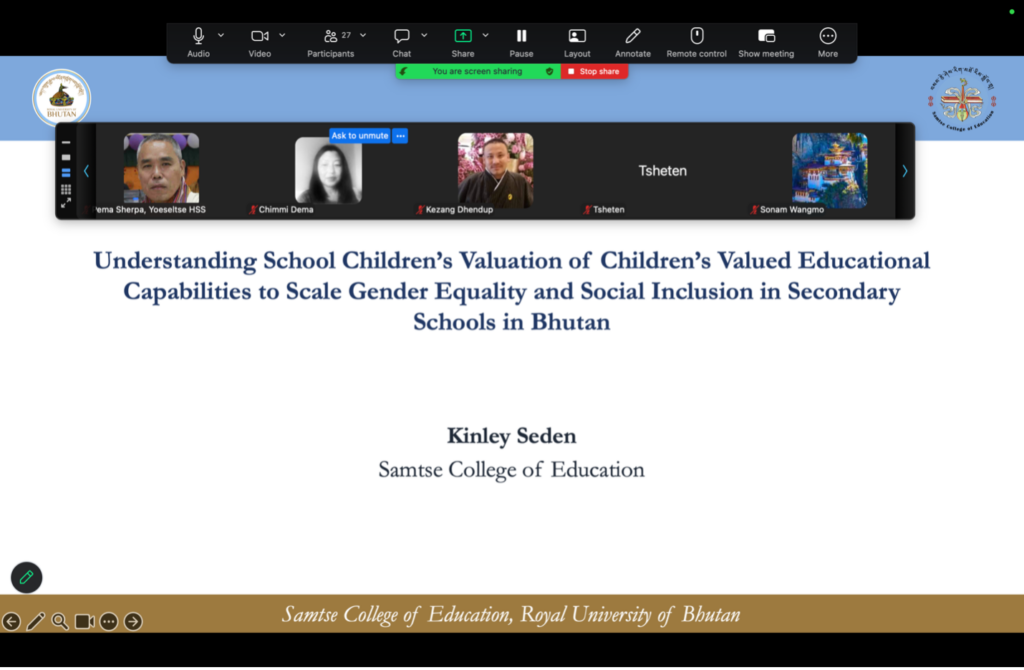
On 8 October 2026, the GESI Project hosted a webinar to share the findings of the baseline and endline studies with stakeholders. The webinar, titled “Understanding School Children’s Valuation of Children’s Valued Educational Capabilities to Scale Gender Equality and Social Inclusion in Secondary Schools in Bhutan,” was presented by Kinley Seden and moderated by Karma Gayphel. Approximately 60 participants, including school leaders, policymakers, teachers, and students, attended the session.
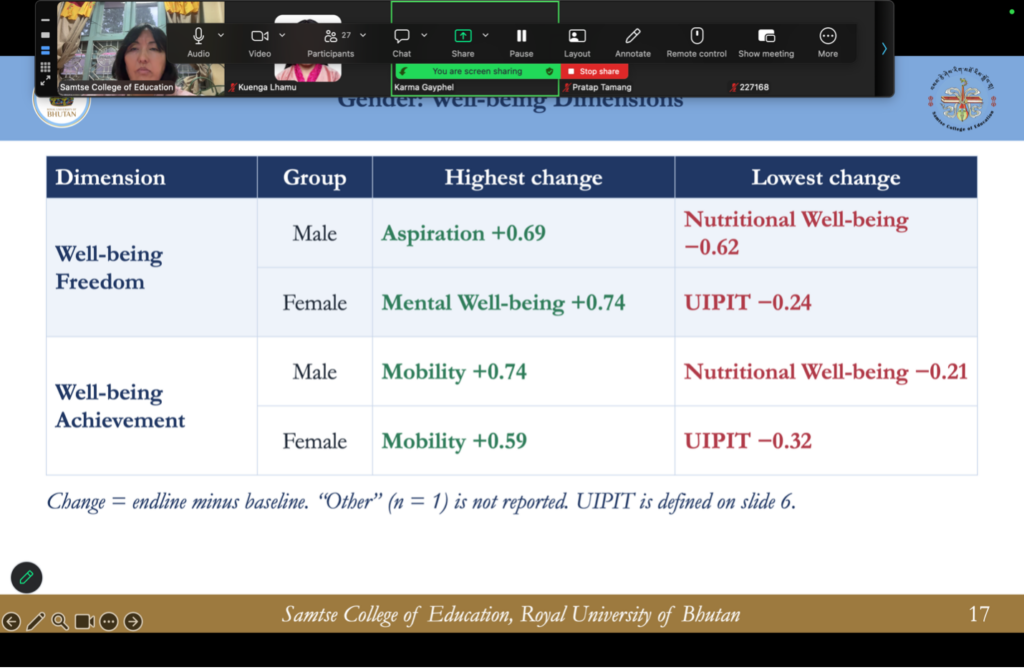
The webinar highlighted changes in children’s valuation of 16 capability domains across the five participating schools following the implementation of the LIKE Club intervention. Overall, children reported high levels of well-being and agency across all four dimensions: well-being freedom, well-being achievement, agency freedom, and agency achievement. Love, Care and Respect; Social Relations; Religion and Identity; and Shelter and Environment emerged as the strongest domains. The findings also indicated that experiences were largely equitable between boys and girls, with minor differences in mobility, autonomy, and participation.
Differences across grade levels were also discussed. Primary students generally reported stronger well-being and learning outcomes, while middle secondary students reported lower levels of mental and physical well-being. A decline in mental well-being among middle secondary students was particularly noteworthy and highlighted the importance of paying greater attention to adolescents’ emotional well-being and school experiences. Older students, meanwhile, demonstrated greater autonomy and participation. Nutritional Well-being was identified as an area requiring further attention.
During the discussion, a participant asked whether the capability gaps identified in the study were also addressed in the Dzongkha curriculum. Although many of these areas are integrated into humanities subjects from Grades 1 to 10, the discussion highlighted the possibility of further exploring how capability-related themes could be incorporated into Dzongkha lessons. This provided a valuable reflection point for the GESI Project team to consider opportunities for strengthening the integration of gender equality, social inclusion, and children’s valued capabilities across different subject areas.
Another participant sought clarification on the relatively low scores for Nutritional Well-being. This question provided an opportunity to reflect on the factors that may influence children’s perceptions and experiences of nutritional well-being and the need to explore this domain further.
The webinar concluded with a brief summary by the moderator, who highlighted the key points raised during the presentation and discussion and thanked all participants for their time and valuable contributions. Overall, the session provided an important platform for sharing research findings, engaging stakeholders in meaningful dialogue, and identifying areas for further reflection and action to strengthen GESI-responsive educational practices in Bhutan. The discussions also underscored the importance of addressing emerging concerns related to adolescent mental well-being and nutritional well-being while building on the positive findings across the capability domains.