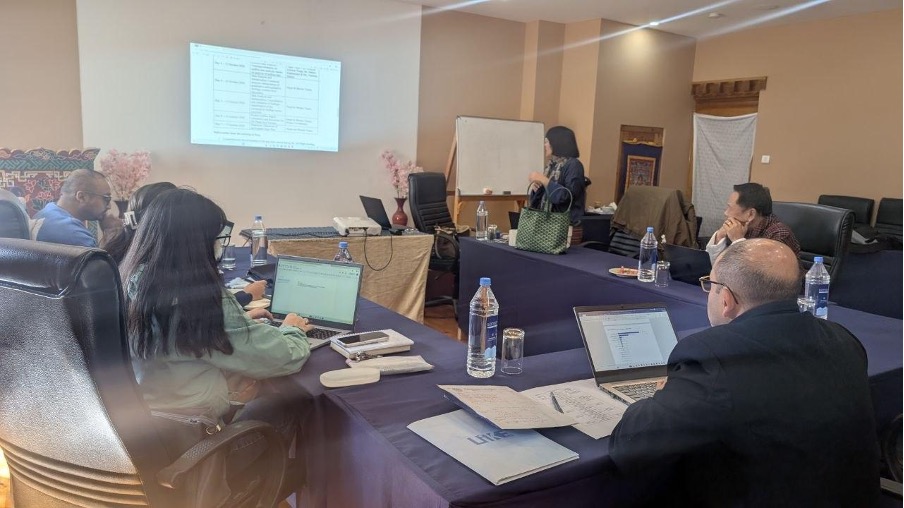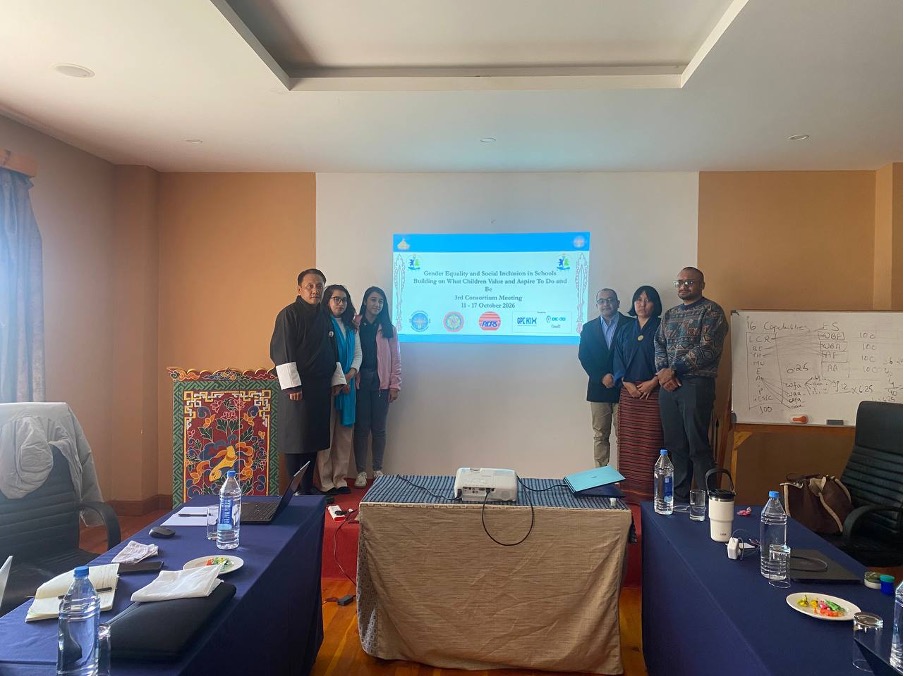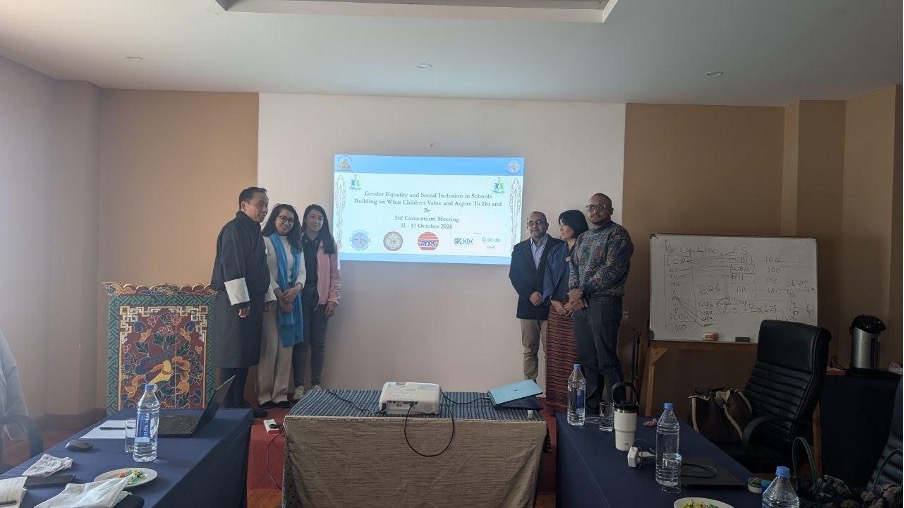
The third consortium meeting of the project Promoting Gender Equality and Social Inclusion (GESI) in Schools: Building on What Children Value and Aspire to Do and Be was held in Paro, Bhutan, from 11 to 17 October 2026. The project is a collaboration between Kathmandu University School of Arts, Nepal; Samtse College of Education (SCE), Bhutan; and RDRS, Bangladesh, with funding from the International Development Research Centre (IDRC).
The meeting brought together the project teams to review progress, assess achievements against planned activities, discuss scaling, and plan activities for Phase IV. The Nepal team was led by the project lead, Dr Binayak Krishna Thapa, and included Saurav Rajbhandari, Yamuna Basnet and Swornika Chhetri. As the RDRS team from Bangladesh was unable to attend in person, they joined the meeting online on the fourth day.
The first day of the meeting, 12 October, featured presentations on project updates from Bhutan by Dr Kinley Seden and from Nepal by Saurav Rajbhandari, alongside monitoring, evaluation and learning (MEL) report tracking. Karma Gayphel, who joined Dr Kinley Seden from Samtse College of Education, also participated in the consortium discussions. The consortium reviewed achievements against the original plans and noted that implementation had exceeded planned targets in many areas, particularly in the number of events conducted. The discussions also highlighted the need to document changes resulting from the project, particularly stakeholders’ reports of new knowledge and skills gained through their engagement.
Discussions on scaling explored how the consortium could develop a shared understanding of scaling and what governments could do to support the expansion of initiatives such as those undertaken through the GESI project. On the second day, 13 October, Utkrishta Sharma delivered a presentation on scaling, prompting further discussion on how project learning and initiatives could be taken forward and the role of government in supporting such efforts.
The second day also included outcome case harvesting, with Dr Binayak Krishna Thapa and Saurav Rajbhandari leading a session on how to write and report outcome cases. The sessions covered output mapping, identifying outcomes and determining the evidence required to substantiate them. Members then worked in their respective country teams to develop potential outcome cases and identify the evidence needed to demonstrate the changes reported by stakeholders.
The first two days also included discussions on endline data analysis. The consortium then focused on planning activities and events for Phase IV, taking into consideration the school calendars in Bhutan and India to ensure that the proposed schedule aligned with school commitments. The planning of activities and events was completed during the meeting.
On 15 October, the consortium met online with the Bangladesh team from RDRS to discuss project-related work and coordination. These discussions supported the consortium’s preparations for the next phase of implementation.
The Nepal team is scheduled to depart on 17 October, while the Samtse College of Education team will return to the College following the conclusion of the meeting.